Light at the poles
A night that lasts a season, and a sun that forgets to set.
A 25-second exposure in July 2005 shows the long Antarctic night and the Aurora Australis at the South Pole. Herbert Ponting photographed the midnight sun in McMurdo Sound in 1911.
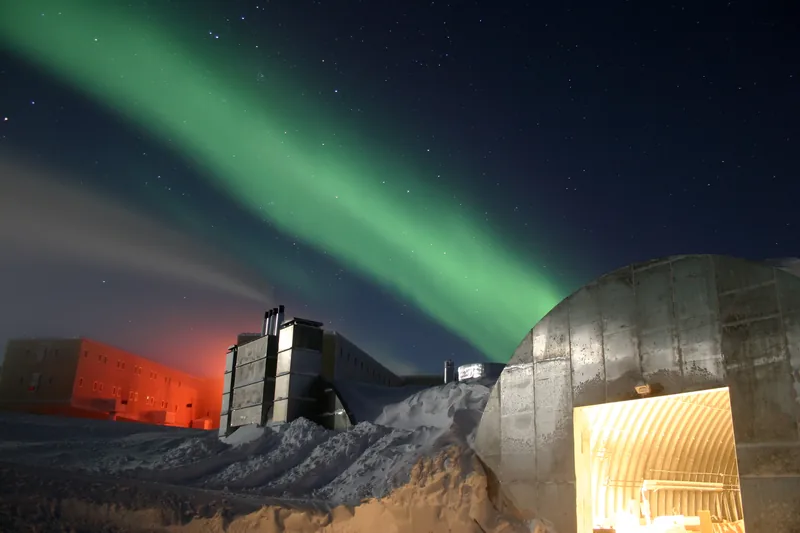
At the South Pole in July, the sun does not rise. The National Science Foundation caption on the photograph above is specific: a full moon and a 25-second exposure, the long Antarctic night, red outdoor lights whose spectrum does not pollute the sky for astrophysics, and a background of green light that “is the Aurora Australis, which dances through the sky virtually all the time during the long Antarctic night (winter).”
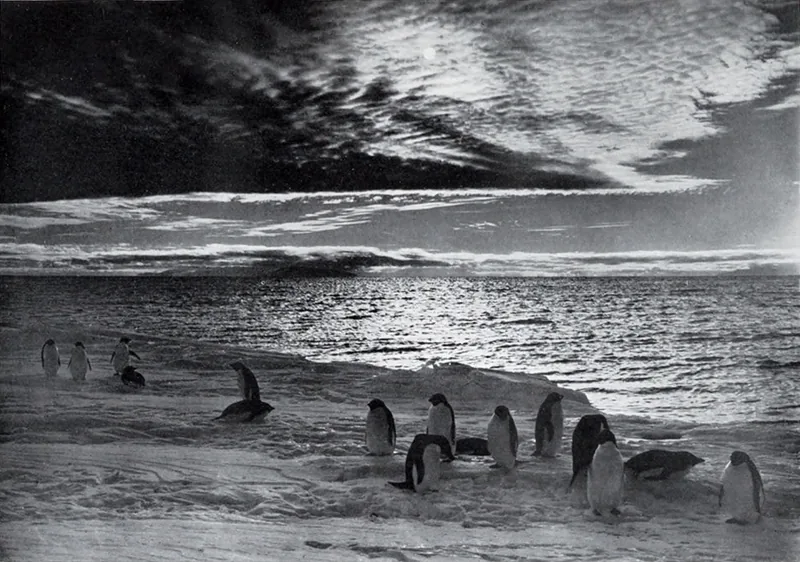
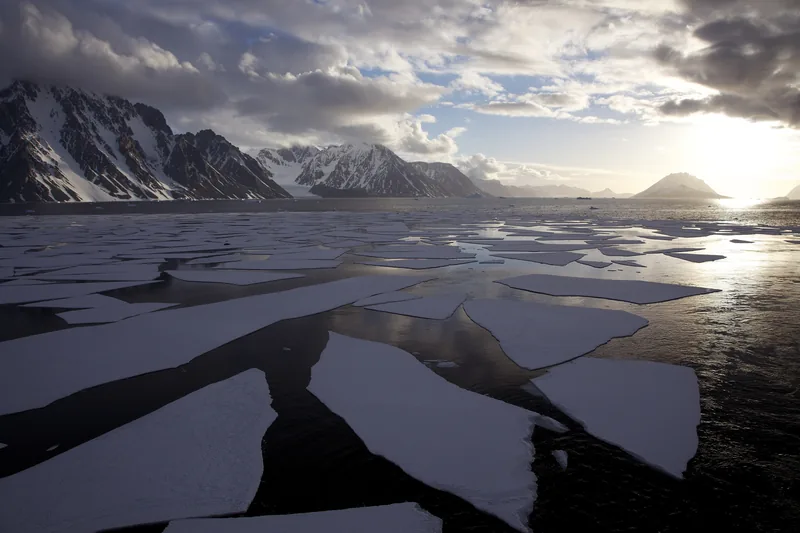
Summer writes the opposite sentence. Herbert Ponting photographed “The Midnight Sun in McMurdo Sound” in 1911, on the Terra Nova Expedition; the file was published in Scott’s Last Expedition in 1913. Almost a century later, on 25 December 2008, Jason Auch wrote, under a colour photograph of a low Antarctic sun: “This is as close as the sun came to setting today. 24 hour daylight in the summer.” The Galileo caption for the Ross Ice Shelf, taken on 8 December 1990, makes the same seasonal point from space: it is late spring, so the sun never sets on the continent.
Those photographs are about light, not about a second copy of the seasons site. Why the poles have a long night and a long day — the tilt of the Earth, solstices and equinoxes — is the promised desk at seasons.climates.im, which is still on the way. This page keeps the official pictures, and the official captions, of what that tilt looks like on the ice.
Enjoyed a desk of official cold records, ice caps, and a night that lasts a season?
No pop-ups. No intrusive advertising. Just interesting stuff. A little support helps the next climates.im site get built.