Discoveries
Unusual official findings, and a record that had to be rescued from a rounding error.
The WMO’s Vostok page explains why some older tables still say −89.4 °C. Satellite maps later found colder snow surfaces. The Dry Valleys barely hold snow. Greenland holds the official Northern Hemisphere air record.
Some of the oddest official facts about polar climates are not storms. They are records, conversions, valleys without snow, and a hemisphere that is cold — just not as cold as Vostok.
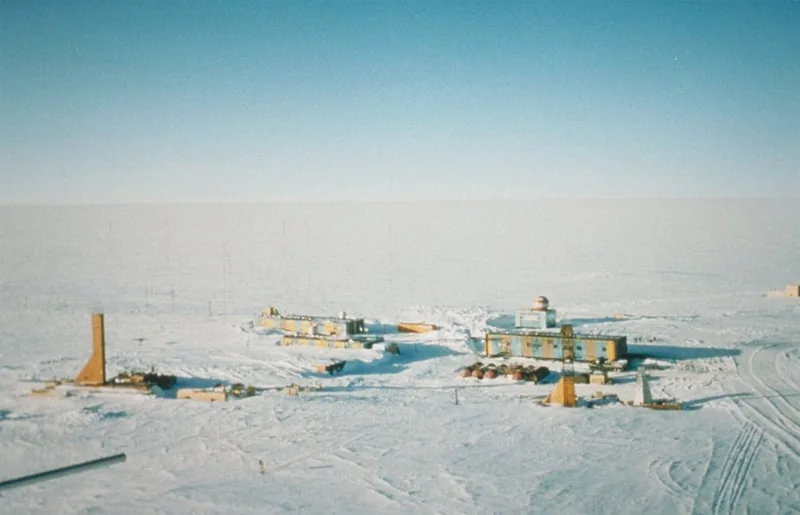
A record that had to be rescued from a rounding error
The world’s official air-temperature record is −89.2 °C at Vostok on 21 July 1983, formally reviewed by the WMO in 2011. [source] [source] Older printed tables sometimes say −89.4 °C. The WMO’s own Vostok page explains why: a conversion through −129 °F and back. Stephen Warren photographed the logbook. This desk treats that as a discovery about official wording, not as a colder day.
A colder snow surface, read from space
NASA’s 2013 satellite maps pointed not at the station but at hollows on a high ridge between Dome Argus and Dome Fuji, and gave a land-surface figure of minus 93.2 °C on 10 August 2010. [source] NSIDC later described a revision to about −98 °C at the surface. [source] The interesting official fact is not “which number wins.” It is that air in a Stevenson screen and the snow skin under a clear polar night are not the same measurement.
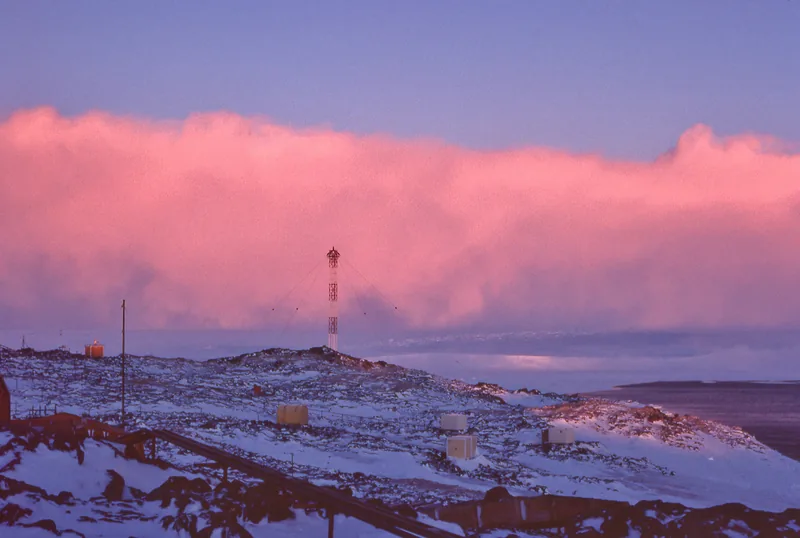
Valleys that behave like a desert, inside an ice sheet
NASA Science’s Dry Valleys caption is almost dry itself: extremely low humidity, a lack of snow and ice cover, a Terra image from 8 December 2002. [source] The Met Office, in a different register, allows ice-cap climate at great altitude as well as at the poles. [source] Together they are a reminder that “polar” is about temperature thresholds, and about dryness, not only about maps coloured white.
The Northern Hemisphere record moved to Greenland
For a long time the figures to beat in the north were −67.8 °C at Verkhoyansk and Oimekon. The WMO has since recognised −69.6 °C at a Greenland automatic weather station on 22 December 1991. [source] It is still more than nineteen degrees warmer than Vostok’s official air record.
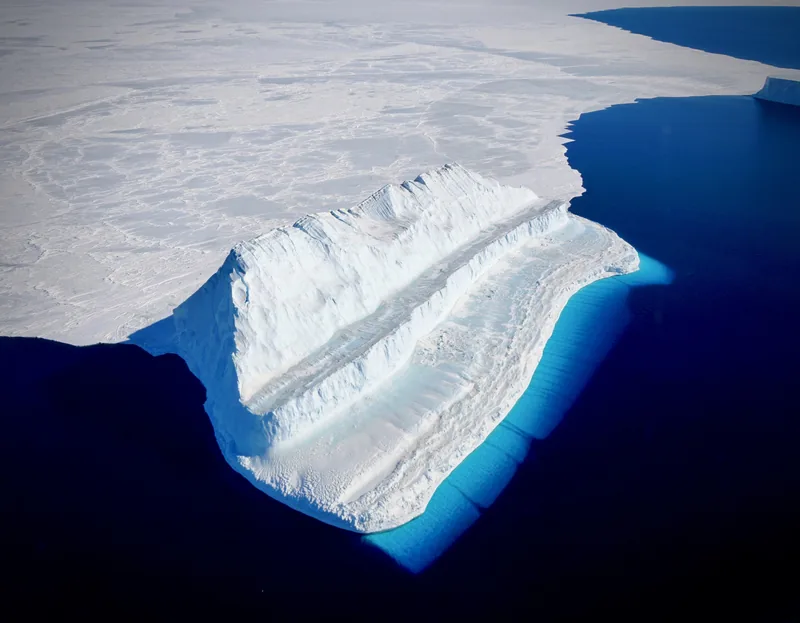
And some discoveries are simply shapes. An IceBridge photograph from 29 November 2017 shows a stepped iceberg in McMurdo Sound, bluest below the waterline, with a caption that talks about erosion, older denser ice, and bergs that can flip. Official, odd, and not a storm report.
Enjoyed a desk of official cold records, ice caps, and a night that lasts a season?
No pop-ups. No intrusive advertising. Just interesting stuff. A little support helps the next climates.im site get built.